
What Jobs Will AI Replace by 2030? A Complete Expert Guide
Discover what jobs AI will replace by 2030, which careers are most at risk, and how to future-proof your skills with expert insights.

Artificial intelligence is no longer a distant concept. It is already changing the way millions of people work. A 2024 McKinsey report estimates that up to 30% of current work activities could be automated by 2030. The big question on everyone’s mind is: what jobs will AI replace by 2030, and how do you protect your career?
This guide gives you a clear, honest, and expert-backed answer. We cover the most at-risk roles, the jobs that AI cannot easily replace, and the practical steps you can take right now.
Learn About: When AI Is Overkill for Your Business
Why 2030 Is the Critical Turning Point
AI is advancing at an exponential pace. Three forces are converging to make 2030 a tipping point:
- Generative AI (like ChatGPT, Gemini, Claude) can now produce text, code, images, and data analysis at human-level quality.
- Robotics and physical automation have become far cheaper, making manual-task automation economically viable for small businesses.
- Enterprises are under pressure to cut costs, and AI offers a clear solution.
The World Economic Forum (2023) estimates that 85 million jobs could be displaced by AI and automation by 2025, while 97 million new roles may emerge. The net outcome depends on how fast workers and societies adapt.
Learn About: Integrate AI Into Human Workflows
Jobs Most at Risk from AI by 2030
Based on research from McKinsey, Oxford Economics, and MIT, these roles have the highest automation potential:
| Job / Role | Why AI Can Replace It | Automation Risk Level |
| Data Entry Clerks | AI reads, sorts, and enters data faster and more accurately | Very High (90%+) |
| Telemarketers | AI voice bots handle scripts, objections, and follow-ups | Very High (90%+) |
| Bank Tellers | Apps and ATMs now handle 95% of transactions | High (80%+) |
| Bookkeepers / Accountants | AI tools like QuickBooks AI auto-categorize and reconcile | High (75%+) |
| Customer Support Agents | AI chatbots resolve Tier-1 queries 24/7 at zero cost | High (70%+) |
| Assembly Line Workers | Robotic arms now outperform humans in speed and precision | High (70%+) |
| Paralegals / Legal Clerks | AI reviews contracts and case law in minutes | Medium-High (60%+) |
| Radiologists (routine scans) | AI diagnoses X-rays with 94% accuracy in studies | Medium (50%+) |
| Truck / Taxi Drivers | Autonomous vehicles advancing; full adoption by 2035 | Medium (40-60%) |
| Journalists (basic reporting) | AI generates financial and sports reports automatically | Medium (40%+) |
Jobs AI Cannot Easily Replace by 2030
AI excels at pattern recognition, repetitive tasks, and data processing. But it struggles with emotional intelligence, physical dexterity in complex environments, creativity, and ethical judgment. These careers remain relatively safe:
- Mental Health Professionals (therapists, counselors) – human empathy is irreplaceable.
- Skilled Tradespeople (plumbers, electricians) – complex physical environments are hard to automate.
- Teachers and Educators – relationship-driven learning needs human presence.
- Social Workers – judgment, empathy, and legal responsibility require humans.
- Creative Directors and Artists – original vision and cultural context are uniquely human.
- Surgeons and Specialized Physicians – high-stakes decisions and manual precision in unpredictable settings.
- AI Trainers, Prompt Engineers, and AI Ethicists – new roles created by AI itself.
How to Protect Your Career from AI Automation
The workers who will thrive in 2030 are not those who fight AI, but those who collaborate with it. Here is a practical action plan:
- Learn AI tools in your field – use them before they replace you.
- Develop soft skills: leadership, creativity, emotional intelligence, critical thinking.
- Upskill into AI-adjacent roles: data annotation, AI operations, prompt engineering.
- Move from execution to strategy – AI handles tasks; humans handle judgment.
- Build a personal brand online to future-proof your career against commoditization.
What jobs will AI replace by 2030?
AI is most likely to replace jobs involving repetitive, rule-based tasks, data processing, and predictable physical labor. The top roles at risk include data entry clerks, telemarketers, bank tellers, customer service agents, and basic bookkeepers. Jobs requiring human empathy, complex judgment, creativity, and physical dexterity in unpredictable environments are significantly safer.
Will AI replace programmers by 2030?
AI tools like GitHub Copilot can write and debug code, but they do not fully replace programmers. By 2030, AI will handle routine coding tasks, while programmers shift toward architecture, system design, and AI oversight. The demand for software engineers is expected to remain strong, but the nature of the role will evolve significantly.
Will AI replace doctors and nurses by 2030?
AI will assist doctors and nurses, particularly in diagnostics and administrative tasks, but will not replace them by 2030. Medical care requires human judgment, empathy, ethical reasoning, and accountability that current AI systems cannot replicate.
Frequently Asked Questions
1. What percentage of jobs will AI replace by 2030?
Estimates vary. McKinsey suggests up to 30% of work activities could be automated by 2030. The World Economic Forum projects 85 million jobs displaced globally, with 97 million new roles created. Net job loss depends heavily on how fast economies adapt.
2. Which industry will be most affected by AI automation?
Finance, manufacturing, retail, and transportation face the highest disruption. Data-heavy office roles in banking and insurance are especially vulnerable, along with assembly-line manufacturing jobs.
3. Will AI replace accountants and bookkeepers?
Basic bookkeeping and data entry in accounting are at high risk. However, strategic accountants, tax advisors, and financial planners who provide human judgment and client relationships will remain in demand.
4. Is AI going to take over customer service jobs?
Yes, to a large degree. AI chatbots already handle a significant portion of Tier-1 customer support. Complex, emotionally sensitive, or escalated cases will still require human agents.
5. What new jobs will AI create by 2030?
AI will generate demand for roles like AI trainers, prompt engineers, AI ethicists, automation consultants, data analysts, robotics technicians, and human-AI collaboration specialists.
6. Will AI replace teachers by 2030?
No. While AI will personalize learning and automate grading, the mentorship, motivation, and relationship-building role of a teacher cannot be replicated by machines. Teachers will work alongside AI tools, not be replaced by them.
7. Can AI replace creative jobs like designers or writers?
AI can generate drafts, images, and templates, but top-tier creative work rooted in strategy, cultural nuance, and original vision remains human. Designers and writers who master AI tools will be more productive and competitive, not replaced.
8. How do I know if my job is at risk from AI?
Ask yourself: Is my work primarily repetitive? Do I process structured data? Does my job follow predictable rules? If yes to most, your role is at higher risk. Roles requiring empathy, strategic judgment, leadership, or creative problem-solving are safer.
9. Will AI automation cause mass unemployment?
History suggests no. Previous waves of automation (industrial revolution, computers) created more jobs than they eliminated. However, the transition is painful and uneven. Workers in low-skill, routine roles face the greatest short-term risk.
10. What skills should I learn to stay relevant in an AI world?
Focus on: AI literacy (understanding and using AI tools), critical thinking, emotional intelligence, data interpretation, communication, and domain expertise in your field. These are the skills AI cannot replicate and that employers increasingly value.
Conclusion
AI will undoubtedly replace millions of jobs by 2030, particularly those built around repetitive, rule-based tasks. But it will also create millions of new opportunities for people who adapt. The smartest move you can make today is not to fear AI, but to learn how to work alongside it.
The workers who understand AI, leverage its power, and bring human judgment, creativity, and empathy to the table will be the ones who define the future of work.
How to Plan an AI System in 7 Days: A Practical Roadmap That Actually Works
Planning AI system in a week is realistic if you follow the right order. This guide walks you through a practical, expert-tested 7-day AI planning roadmap.
Read Full GuideKey Takeaways & Common Questions
1. What percentage of jobs will AI replace by 2030?▼
Estimates vary. McKinsey suggests up to 30% of work activities could be automated by 2030. The World Economic Forum projects 85 million jobs displaced globally, with 97 million new roles created. Net job loss depends heavily on how fast economies adapt.
2. Which industry will be most affected by AI automation?▼
Finance, manufacturing, retail, and transportation face the highest disruption. Data-heavy office roles in banking and insurance are especially vulnerable, along with assembly-line manufacturing jobs.
3. Will AI replace accountants and bookkeepers?▼
Basic bookkeeping and data entry in accounting are at high risk. However, strategic accountants, tax advisors, and financial planners who provide human judgment and client relationships will remain in demand.
4. Is AI going to take over customer service jobs?▼
Yes, to a large degree. AI chatbots already handle a significant portion of Tier-1 customer support. Complex, emotionally sensitive, or escalated cases will still require human agents.
5. What new jobs will AI create by 2030?▼
AI will generate demand for roles like AI trainers, prompt engineers, AI ethicists, automation consultants, data analysts, robotics technicians, and human-AI collaboration specialists.
6. Will AI replace teachers by 2030?▼
No. While AI will personalize learning and automate grading, the mentorship, motivation, and relationship-building role of a teacher cannot be replicated by machines. Teachers will work alongside AI tools, not be replaced by them.
7. Can AI replace creative jobs like designers or writers?▼
AI can generate drafts, images, and templates, but top-tier creative work rooted in strategy, cultural nuance, and original vision remains human. Designers and writers who master AI tools will be more productive and competitive, not replaced.
8. How do I know if my job is at risk from AI?▼
Ask yourself: Is my work primarily repetitive? Do I process structured data? Does my job follow predictable rules? If yes to most, your role is at higher risk. Roles requiring empathy, strategic judgment, leadership, or creative problem-solving are safer.
9. Will AI automation cause mass unemployment?▼
History suggests no. Previous waves of automation (industrial revolution, computers) created more jobs than they eliminated. However, the transition is painful and uneven. Workers in low-skill, routine roles face the greatest short-term risk.
10. What skills should I learn to stay relevant in an AI world?▼
Focus on: AI literacy (understanding and using AI tools), critical thinking, emotional intelligence, data interpretation, communication, and domain expertise in your field. These are the skills AI cannot replicate and that employers increasingly value.
Discuss your AI project with our team
Reach out to our independent research team for scoping reviews, vendor evaluations, or feedback.
Continue Reading
Handpicked research and implementation guides to deepen your understanding.
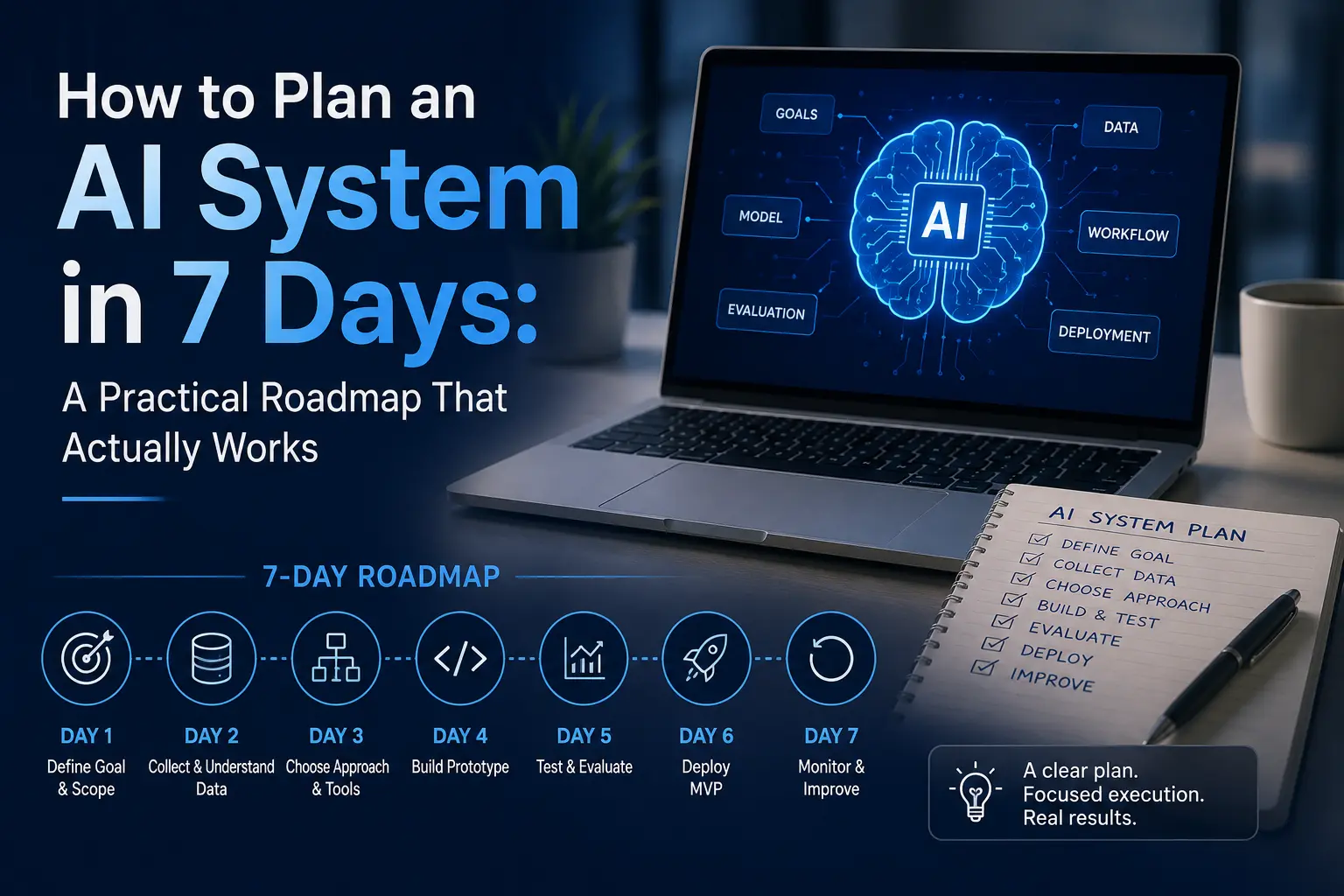
How to Plan an AI System in 7 Days: A Practical Roadmap That Actually Works
Planning AI system in a week is realistic if you follow the right order. This guide walks you through a practical, expert-tested 7-day AI planning roadmap.
When Should I Use AI vs. When Should I Skip It? A Practical Guide
Learn when AI adds real business value & when it's better to avoid it. Make smarter, cost-effective decisions with this practical AI adoption guide.
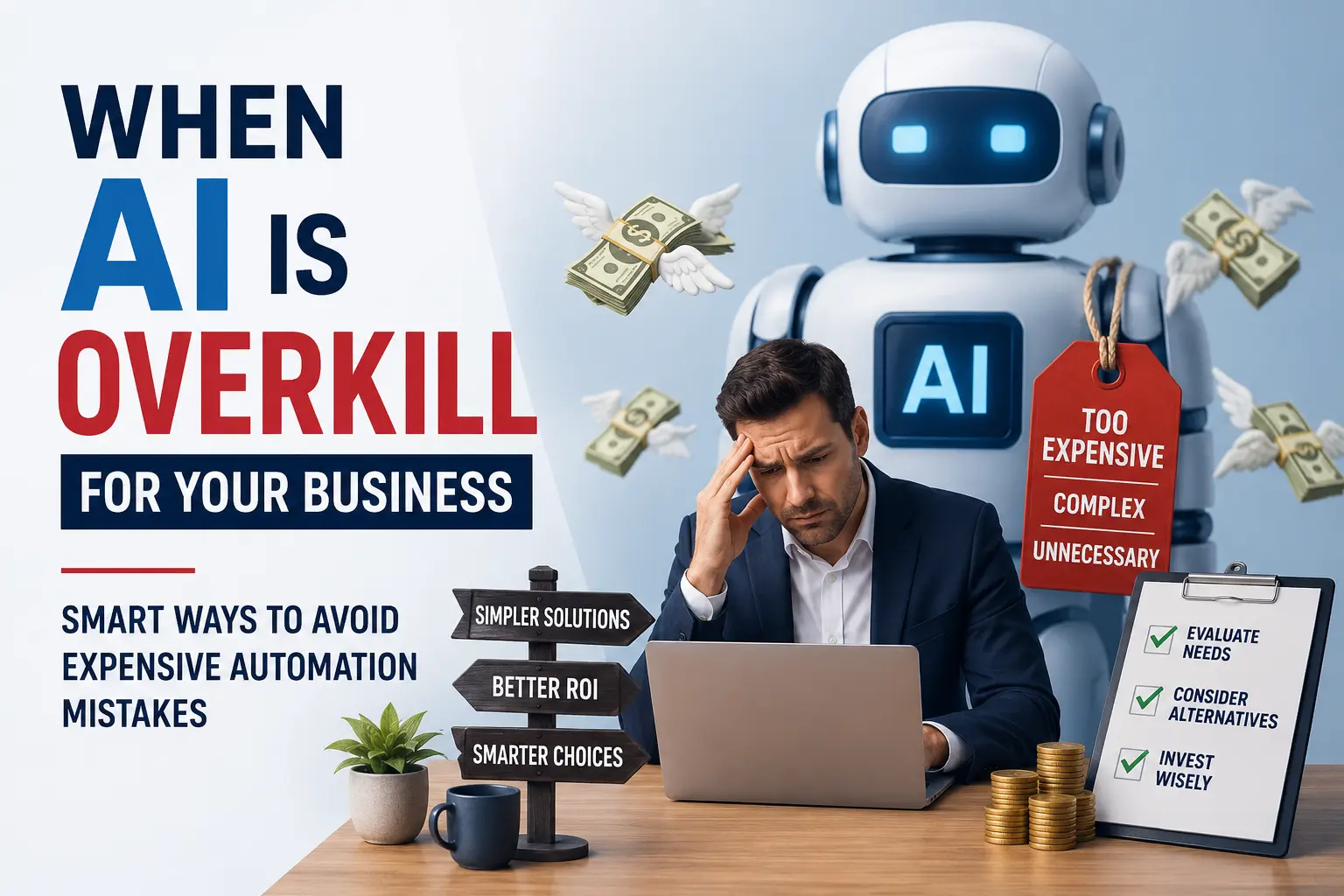
When AI Is Overkill for Your Business: Smart Ways to Avoid Expensive Automation Mistakes
Learn when AI is unnecessary for your business and how to avoid costly automation mistakes. Discover smarter, cost-effective solutions first.