When AI Is Overkill for Your Business: Smart Ways to Avoid Expensive Automation Mistakes
Learn when AI is unnecessary for your business and how to avoid costly automation mistakes. Discover smarter, cost-effective solutions first.
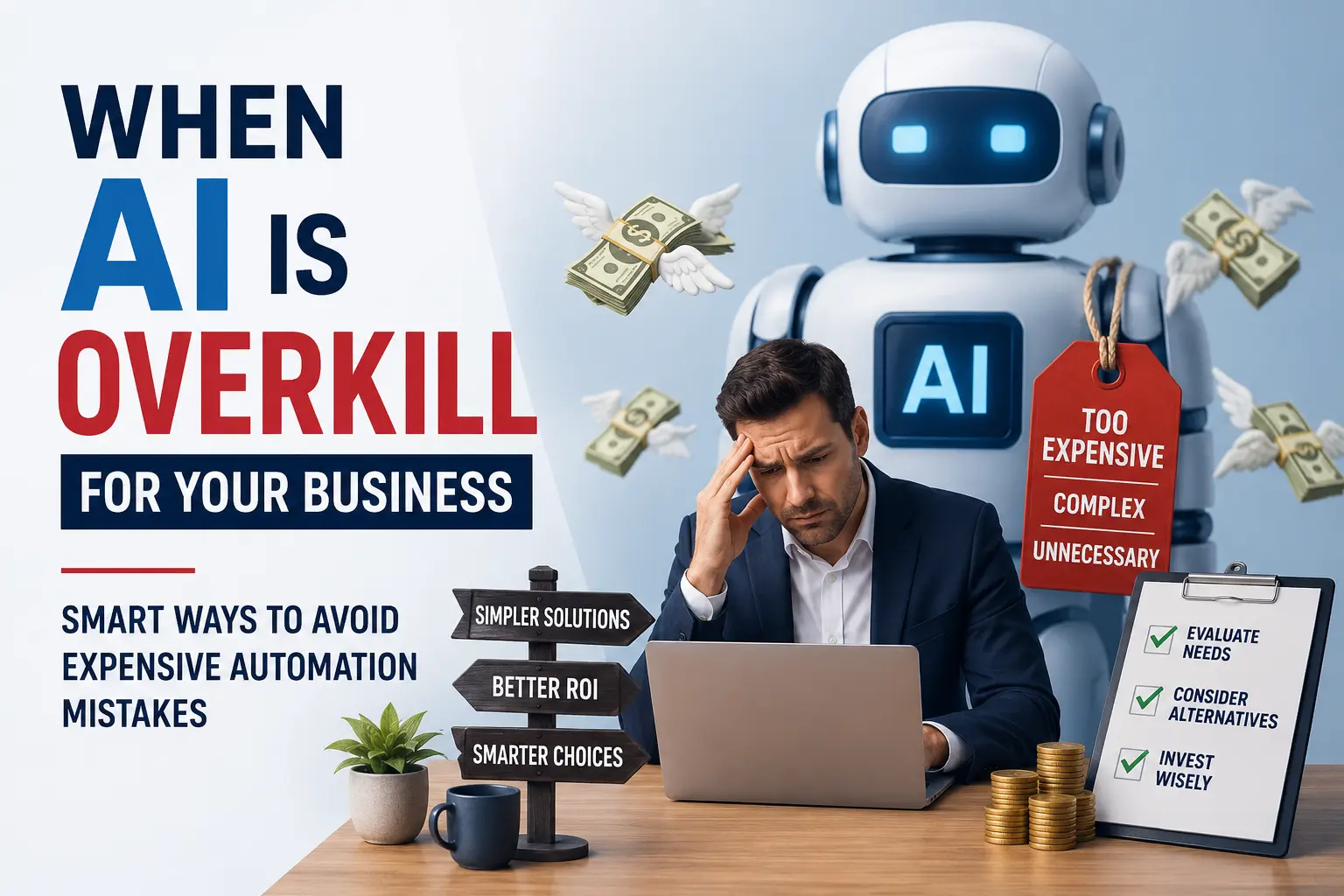
When AI Is Overkill for Your Business
Artificial intelligence is everywhere right now. From customer support chatbots to predictive analytics and AI-generated marketing, businesses are being told they need AI or risk falling behind. But here’s the reality most agencies and software vendors avoid discussing: Sometimes AI is completely unnecessary.
For many startups, small businesses, and even growing SaaS companies, traditional automation, better workflows, or simple software integrations can solve the same problems faster and at a fraction of the cost. Businesses often waste thousands of dollars implementing AI tools they barely use. The result? Complicated systems, frustrated teams, poor ROI, and operational chaos.
This guide explains:
- When AI is actually useful
- When AI becomes expensive overkill
- Common AI implementation mistakes
- How to choose technology based on ROI instead of hype
- Better alternatives for many businesses
If you’re considering AI for your business, this article will help you make smarter decisions before spending money on the wrong solution.
**Quick CTA: Need Honest AI Advice?**
Why Businesses Rush Into AI Too Early
Many companies adopt AI because competitors are doing it, not because they actually need it. This creates a dangerous situation where businesses build expensive AI systems for problems that could be solved with:
- CRM automation
- Rule-based workflows
- Better onboarding
- API integrations
- Standard analytics dashboards
- Simple customer support systems
In many cases, AI adds complexity instead of efficiency.
Signs AI Is Overkill for Your Business
1\. Your Processes Are Still Disorganized
AI cannot fix broken workflows.
If your business operations are inconsistent, undocumented, or manually chaotic, adding AI usually makes the problem worse.
Example
A company installs an AI customer support chatbot before creating proper FAQ documentation. The chatbot gives inconsistent answers because the business itself lacks structured information.
The smarter approach:
- Organize workflows first
- Create SOPs
- Improve documentation
- Then evaluate automation opportunities
**2\. You Don’t Have Enough Data**
Many AI systems depend on quality data.
Without large, clean, structured datasets, AI tools produce weak results.
Common Mistake
Small e-commerce stores install AI recommendation engines with only a few hundred products and limited customer history.
The result:
- Poor recommendations
- Minimal conversion improvement
- Wasted subscription costs
Simple rule-based product suggestions often work better at this stage.
3\. A Simple Automation Tool Can Solve the Problem
This is one of the biggest AI implementation mistakes businesses make.
Not every repetitive task needs machine learning.
Better Alternatives to AI
| Problem | AI Solution | Simpler Alternative |
|---|---|---|
| Lead follow-up | AI sales assistant | CRM automation |
| Appointment booking | AI scheduling bot | Calendly integration |
| Customer support | AI chatbot | Knowledge base + live chat |
| Reporting | Predictive AI analytics | Dashboard automation |
| Email responses | AI responder | Email templates |
AI vs Simple Automation
What Most Businesses Actually Need
Most businesses benefit more from:
- Workflow optimization
- CRM automation
- API integrations
- Reporting dashboards
- Task automation
- Centralized systems
Instead of advanced AI.
4\. Your Team Won’t Use the AI Tools
One overlooked issue is employee adoption.
Businesses buy advanced AI software expecting productivity gains, but employees continue using spreadsheets, WhatsApp, or manual processes because the AI tools feel too complicated.
Technology only works if people actually use it.
5. You’re Chasing Trends Instead of ROI
Many businesses implement AI for marketing purposes rather than for operational value.
Examples:
- “AI-powered” website labels
- Unnecessary chatbot integrations
- Overengineered dashboards
- AI-generated reports nobody reads
If AI does not:
- save time
- increase revenue
- reduce costs
- improve customer experience
it may not be worth implementing.
Real-World Examples of AI Being Overkill
Example 1: Restaurant Chatbot Failure
A local restaurant invested heavily in an AI ordering assistant.
Customers became frustrated because:
- It misunderstood custom orders
- Couldn’t handle local language nuances
- Failed during peak hours
The restaurant later replaced it with:
- WhatsApp ordering
- A simple online menu
- Automated confirmations
Result:
- Faster ordering
- Lower costs
- Better customer satisfaction
Example 2: Startup Analytics Disaster
A SaaS startup purchased expensive predictive AI analytics software.
But they only had:
- limited users
- incomplete tracking
- inconsistent reporting.
The AI insights were inaccurate because the dataset was too small.
A simpler analytics dashboard would have been more effective.
When AI Actually Makes Sense
AI is powerful when used correctly.
AI Is Worth Considering When:
You Have Large Datasets
AI performs better with scale and patterns.
You Handle Repetitive High-Volume Tasks
Examples:
- Customer support tickets
- Fraud detection
- Inventory forecasting
- Large-scale personalization
Manual Processes Are Costing Significant Revenue
If inefficiencies directly impact profits, AI may provide a measurable ROI.
You Already Have Stable Operations
AI works best when layered onto organized systems.
Decision Framework: Do You Really Need AI?
**Ask These Questions First**
| Question | If Answer is “No” |
|---|---|
| Is the problem repetitive at scale? | AI may not help |
| Do we have enough quality data? | AI results may fail |
| Will AI save measurable time or money? | Avoid implementation |
| Can automation solve this more simply? | Use automation first |
| Will employees adopt the system? | Expect resistance |
Need help deciding whether your business actually needs AI or just better automation?
The Hidden Costs of AI Businesses Ignore
AI Is Not Just Software
Many businesses underestimate:
- setup costs,
- training costs,
- maintenance,
- integrations,
- security,
- compliance,
- staff onboarding,
- API expenses.
Common Hidden AI Costs
| Expense Type | Potential Cost Impact |
|---|---|
| API usage fees | Monthly scaling costs |
| Model training | Expensive infrastructure |
| Maintenance | Ongoing development |
| Team training | Reduced productivity initially |
| Compliance | Legal and security costs |
| Integration | Developer expenses |
Smart Alternatives to AI for Small Businesses
Before investing in AI, many companies should explore:
CRM Automation
Automated lead tracking and follow-ups often outperform complex AI sales systems.
Workflow Automation
Tools like Zapier, Make, and native integrations can eliminate repetitive work efficiently.
Better UX Design
Sometimes customers just need clearer navigation, faster checkout, or simpler onboarding.
Standard Analytics
Good dashboards often provide enough operational insight without predictive AI.
How to Avoid AI Implementation Mistakes
Start With the Business Problem
Never start with:
“We need AI.”
Start with:
“What specific problem are we solving?”
Measure ROI Before Scaling
Test small implementations before investing heavily.
Example
Instead of building a custom AI chatbot:
- Test customer demand first
- Use hybrid live chat
- Analyze support volume
- Validate automation opportunities
Build Processes Before Automation
Good automation scales good systems.
Bad automation scales chaos.
What Smart Businesses Are Doing in 2026
The smartest companies are not blindly adding AI everywhere.
They are:
- choosing selective automation,
- focusing on customer experience,
- improving operational efficiency,
- reducing unnecessary software costs,
- and implementing AI only where it creates measurable business value.
This practical approach usually outperforms hype-driven AI adoption.
FAQ Section
When is AI unnecessary for a business?
AI is unnecessary when simple automation, better workflows, or standard software can solve the same problem more efficiently and at lower cost. Many small businesses benefit more from process optimization before investing in AI.
Do small businesses really need AI?
Not always. Many small businesses can improve productivity using CRM systems, workflow automation, analytics dashboards, and integrations without implementing expensive AI systems.
What is the difference between AI and automation?
Automation follows predefined rules and workflows. AI attempts to simulate decision-making, predictions, or learning from data. Many business tasks only require automation, not advanced AI.
How do I know if AI will provide ROI?
AI should produce measurable improvements, such as:
reduced labor costs,
faster operations,
higher conversions,
improved customer support,
or increased efficiency.
If ROI cannot be clearly measured, AI may not be the right investment.
What should businesses do before implementing AI?
Before adopting AI, businesses should:
Organize workflows
Standardize processes
Improve data quality
Define measurable goals
Test simpler automation solutions first
Final Thoughts
AI can absolutely transform businesses when applied strategically. But forcing AI into every workflow often creates unnecessary costs, complexity, and frustration.
For Learn About: AI Tools for Reducing Operational Costs, Click Here!
For many companies, the smartest move is not “more AI.”
It’s better systems, cleaner workflows, practical automation, and technology decisions driven by real business outcomes.
Businesses that focus on ROI instead of hype are far more likely to scale sustainably in 2026 and beyond.
Looking for honest guidance on AI, automation, SaaS development, or workflow optimization?
Connect with experienced professionals who help businesses choose practical, scalable solutions that actually improve operations and growth.
How to Plan an AI System in 7 Days: A Practical Roadmap That Actually Works
Planning AI system in a week is realistic if you follow the right order. This guide walks you through a practical, expert-tested 7-day AI planning roadmap.
Read Full GuideKey Takeaways & Common Questions
When is AI unnecessary for a business? ▼
AI is unnecessary when simple automation, better workflows, or standard software can solve the same problem more efficiently and at lower cost. Many small businesses benefit more from process optimization before investing in AI.
Do small businesses really need AI? ▼
Not always. Many small businesses can improve productivity using CRM systems, workflow automation, analytics dashboards, and integrations without implementing expensive AI systems.
What is the difference between AI and automation? ▼
Automation follows predefined rules and workflows. AI attempts to simulate decision-making, predictions, or learning from data. Many business tasks only require automation, not advanced AI.
How do I know if AI will provide ROI? ▼
AI should produce measurable improvements, such as: <br>reduced labor costs, <br>faster operations, <br>higher conversions, <br>improved customer support, <br>or increased efficiency. <br>If ROI cannot be clearly measured, AI may not be the right investment.
What should businesses do before implementing AI? ▼
Before adopting AI, businesses should: <br>Organize workflows <br>Standardize processes <br>Improve data quality <br>Define measurable goals <br>Test simpler automation solutions first
Discuss your AI project with our team
Reach out to our independent research team for scoping reviews, vendor evaluations, or feedback.
Continue Reading
Handpicked research and implementation guides to deepen your understanding.
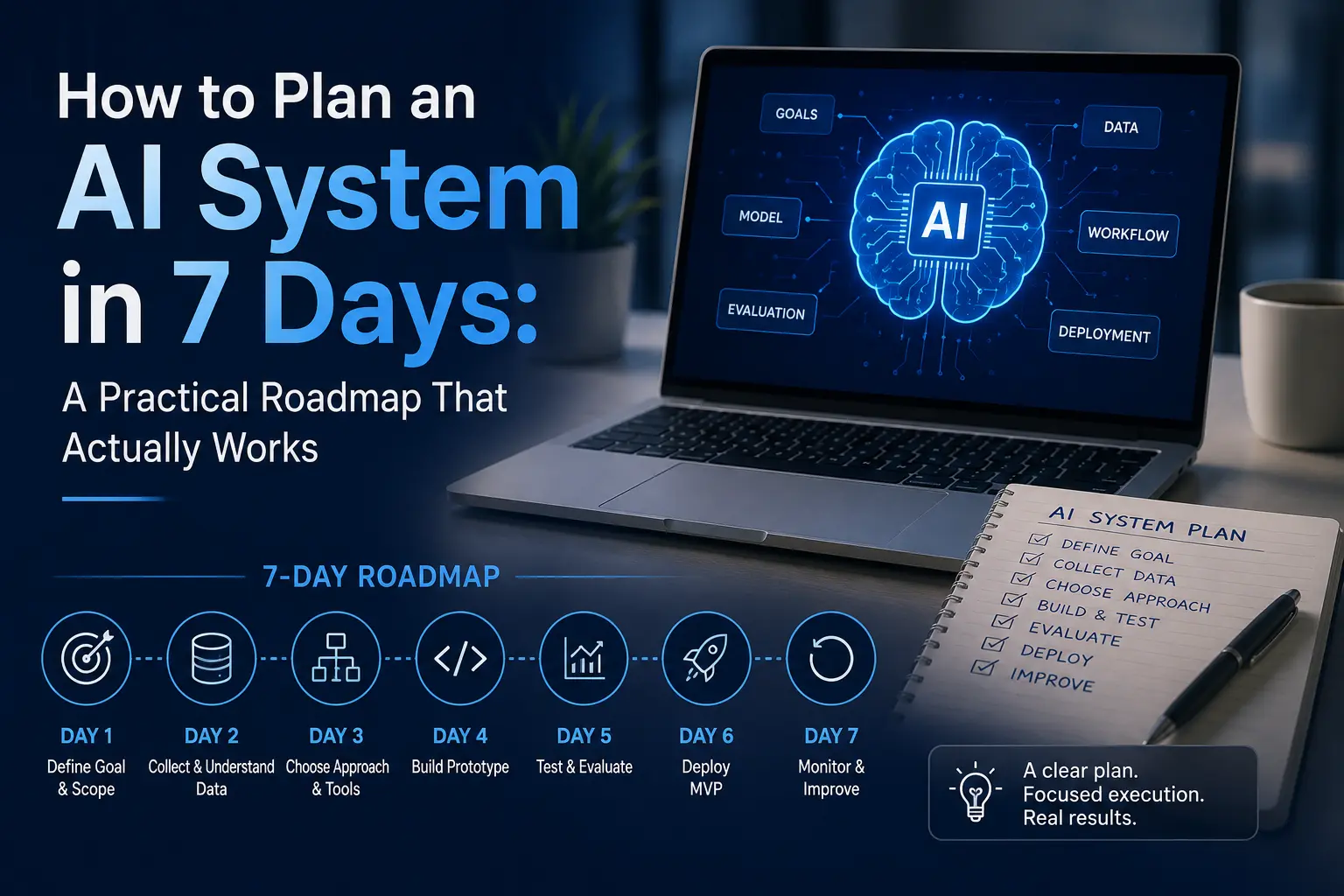
How to Plan an AI System in 7 Days: A Practical Roadmap That Actually Works
Planning AI system in a week is realistic if you follow the right order. This guide walks you through a practical, expert-tested 7-day AI planning roadmap.

What Jobs Will AI Replace by 2030? A Complete Expert Guide
Discover what jobs AI will replace by 2030, which careers are most at risk, and how to future-proof your skills with expert insights.
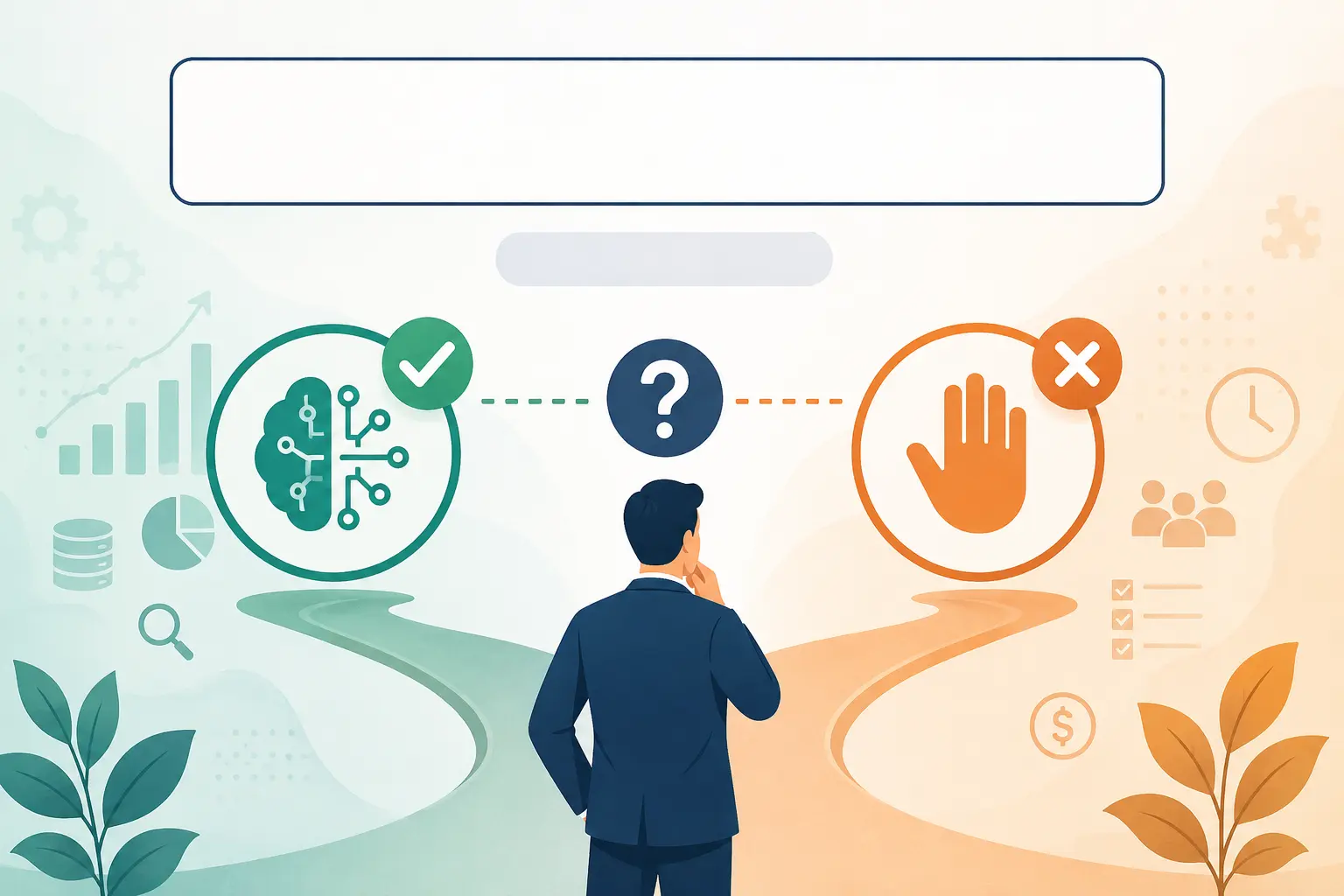
When Should I Use AI vs. When Should I Skip It? A Practical Guide
Learn when AI adds real business value & when it's better to avoid it. Make smarter, cost-effective decisions with this practical AI adoption guide.